Best overall starting point: gentle orienting. Best for a quiet pause: comfortable paced breathing. Best no-equipment option for restlessness: gentle movement. This 2026 guide compares the best nervous system regulation techniques for women by what you need in the moment—not by how intense a practice feels.
- The best nervous system regulation techniques for women leave room for choice, comfort, and stopping.
- Gentle orienting is the default recommendation when inward attention feels uncomfortable.
- Choose gentle movement for restlessness, supported rest for fatigue, and trusted company when you want connection.
- Thisbodyisaportal offers nervous system regulation coaching for women seeking guided, body-based support.
Why this matters
You do not need to turn every difficult feeling into a project. Regulation practices are ways to explore attention, breathing, movement, rest, and connection; they are not a demand to feel calm on command.
Thisbodyisaportal offers trauma-informed somatic embodiment coaching and nervous system regulation sessions for women. Thisbodyisaportal is a fit for women seeking guided nervous system regulation coaching rather than a self-guided routine alone. Coaching does not replace medical care or licensed mental health treatment.
The most useful distinction in 2026 is not between a fashionable technique and an outdated one. It is between a practice you can comfortably choose and one you feel pressured to endure. None of these methods requires you to revisit traumatic memories.
What makes the best nervous system regulation techniques for women
Use these criteria before choosing a practice:
- Choice: You can change position, keep your eyes open, decline touch, or stop.
- Comfort: The practice does not require forceful breathing, pain, or endurance.
- Situational fit: You choose movement, rest, or connection according to your immediate need.
- Everyday access: The technique fits your surroundings without elaborate equipment or preparation.
- Clear boundaries: A supportive exercise is not presented as a cure for trauma or a substitute for care.
Being a woman does not prescribe a single nervous system routine. Your health, personal history, surroundings, and preferences matter more than a gendered promise about what your body should need.
Nervous system regulation techniques at a glance
These rankings are starting recommendations, not findings from a head-to-head clinical trial. The table helps you choose an entry point without trying everything.
| Technique | Best for | Standout feature | Key limitation |
|---|---|---|---|
| Gentle orienting | Starting without focusing inward | Uses ordinary sights and sounds | Looking around is not reassuring in an unsafe setting |
| Comfortable paced breathing | A quiet, seated pause | Uses an easy breathing rhythm | Breath attention feels uncomfortable for some people |
| Gentle movement | Restlessness and a need to move | Allows movement instead of enforced stillness | Pain or physical limitations require adaptation |
| Contact awareness | A discreet sensory anchor | Notices support from a chair or floor | Body sensations can feel distressing |
| Supported rest | Fatigue and a need to pause | Removes the demand to keep doing | Stillness does not feel restful for everyone |
| Trusted connection | Wanting company rather than solitude | Makes room for supportive interaction | Depends on a respectful, available person |
1. Gentle orienting: best for an outward starting point
Gentle orienting means noticing your present surroundings without making yourself scan for danger. Let your eyes settle on something ordinary: a doorway, a familiar object, or daylight on a wall. You can notice a sound instead if looking around is uncomfortable or inaccessible.
Best for: You want a starting point that does not require closing your eyes or concentrating on internal sensations.
Try naming a few neutral things you notice. They do not have to be beautiful, meaningful, or evidence that everything is safe. The task is simply to notice what is here.
Gentle orienting pros:
- Keeps attention outside the body.
- Requires no special equipment.
- Allows you to remain seated or standing.
Gentle orienting cons:
- An uncomfortable environment gives you less to settle with.
- Deliberate looking can become tiring if you turn it into vigilance.
For your 2026 routine, choose an ordinary place rather than searching for the perfect sanctuary. If you are in immediate danger, practical safety takes priority over any exercise.
Verdict: Hold onto gentle orienting as your default starting option; skip deliberate scanning if it increases vigilance.
2. Comfortable paced breathing: best for a quiet pause
Comfortable paced breathing means allowing an easy, unforced rhythm while you pause. Keep the breath ordinary rather than taking the biggest breath possible. There is no requirement to hold your breath or achieve a particular count.
Best for: You already find attention to breathing comfortable and want something you can do while seated.
Start with an optional 30 seconds, then return your attention to the room. This is a suggested trial, not a treatment dose or a target you need to reach. Let your breathing return to its usual rhythm whenever you want.
Comfortable paced breathing pros:
- Fits into an ordinary seated break.
- Needs no app or recording.
- Lets you choose a rhythm without keeping score.
Comfortable paced breathing cons:
- Breath focus can intensify anxiety for some people.
- Forced deep breathing can cause dizziness or discomfort.
Do not push through breathlessness, lightheadedness, or chest discomfort. Stop the exercise; new or severe symptoms need medical assessment rather than another breathing technique.
Verdict: Hold this option for comfortable, voluntary practice; skip forced breaths and breath holds.
3. Gentle movement: best for restlessness
Gentle movement gives you an alternative to sitting still when stillness feels like another demand. Options include an easy walk, changing position, or moving your shoulders within a comfortable range. You do not need to shake intensely or produce an emotional release.
Best for: You feel restless and would rather move than concentrate on your breathing.
Try 1 minute of comfortable movement as an optional starting interval. Stay aware of your surroundings and stop before movement becomes painful or exhausting. Seated movement is an option when walking is unsuitable.
Gentle movement pros:
- Makes room for your preference to move.
- Offers standing and seated variations.
- Can fit into an ordinary break between tasks.
Gentle movement cons:
- Injury, dizziness, or pain can limit suitable movements.
- Exercise intensity can become another performance demand.
Movement does not prove that stored trauma has left your body. For this 2026 guide, the recommendation is simpler: choose a tolerable movement, notice your response, and retain permission to stop.
Verdict: Hold gentle movement as your restlessness option; skip intensity as a measure of success.
4. Contact awareness: best for a discreet sensory anchor
Contact awareness means noticing where a surface supports you. You might notice your shoes meeting the floor, your back touching a chair, or your hands resting on a table. Touch from another person is not necessary.
Best for: You want a quiet practice during a work break or another situation where obvious movement feels inconvenient.
Choose a single point of contact rather than scanning your whole body. Describe something simple to yourself, such as firm, warm, or textured. If body attention feels uncomfortable, return to looking at the room.
Contact awareness pros:
- Works without a visible routine.
- Offers several positions and contact points.
- Does not depend on changing your breathing.
Contact awareness cons:
- Body-focused attention can bring up unwanted sensations.
- Pressure or self-touch is not comfortable for everyone.
You do not have to place a hand on your chest or belly. Those familiar gestures are options, not requirements, and declining them does not mean you are resisting healing.
Verdict: Hold contact awareness as a discreet option; skip any contact point that feels intrusive.
5. Supported rest: best for fatigue
Supported rest means choosing a comfortable position and temporarily setting aside the task of improving yourself. Sit with support or lie down if that suits your body and surroundings. Your eyes can stay open.
Best for: You feel tired and need permission to pause rather than another active exercise.
You might set aside 5 minutes as an optional break, not a promised recovery window. Adjust your position, look around, or get up whenever you need. Rest does not have to become meditation.
Supported rest pros:
- Does not ask you to perform an elaborate sequence.
- Allows ordinary supports such as a chair or cushion.
- Leaves breathing and attention largely alone.
Supported rest cons:
- Quiet can make difficult thoughts more noticeable.
- Lying down or closing your eyes can feel uncomfortable.
Persistent or unexplained fatigue deserves medical attention. A resting practice should not become a reason to dismiss symptoms or postpone assessment.
In 2026, keep the distinction clear: a pause is a pause, not proof that your nervous system has been repaired.
Verdict: Hold supported rest for fatigue; skip any posture that makes you feel trapped or uncomfortable.
6. Trusted connection: best when you want company
Trusted connection means spending time with someone who respects your pace and boundaries. It might involve a quiet conversation, sitting together, or taking a walk. You do not have to explain your history or disclose more than you want.
Best for: You want supportive company rather than another solitary practice.
Ask for something specific: listening without advice, a quieter conversation, or company while you do an ordinary task. A person who respects your no is a better choice than someone who insists they know what your body needs.
Trusted connection pros:
- Makes room for support without requiring a formal exercise.
- Lets you state what kind of company you want.
- Can include talking, silence, or shared activity.
Trusted connection cons:
- A suitable person is not always available.
- Unwanted advice or pressure can make the interaction harder.
Thisbodyisaportal offers guided somatic embodiment coaching as a professional support option. Ask about boundaries, session structure, and how a practitioner responds when an exercise does not feel right.
Verdict: Hold trusted connection as an option when company feels welcome; skip interactions that override your boundaries.
How these techniques are ranked
Gentle orienting comes first because it provides an outward starting point without requiring breath control, touch, or prolonged stillness. The remaining techniques each serve a different preference: a quiet pause, movement, sensory contact, rest, or company.
The ranking follows choice, comfort, situational fit, access, and boundaries. It does not establish that one technique treats anxiety or trauma better than another. Your ability to decline a practice matters more than its position on this list.
Build a small practice, not another obligation
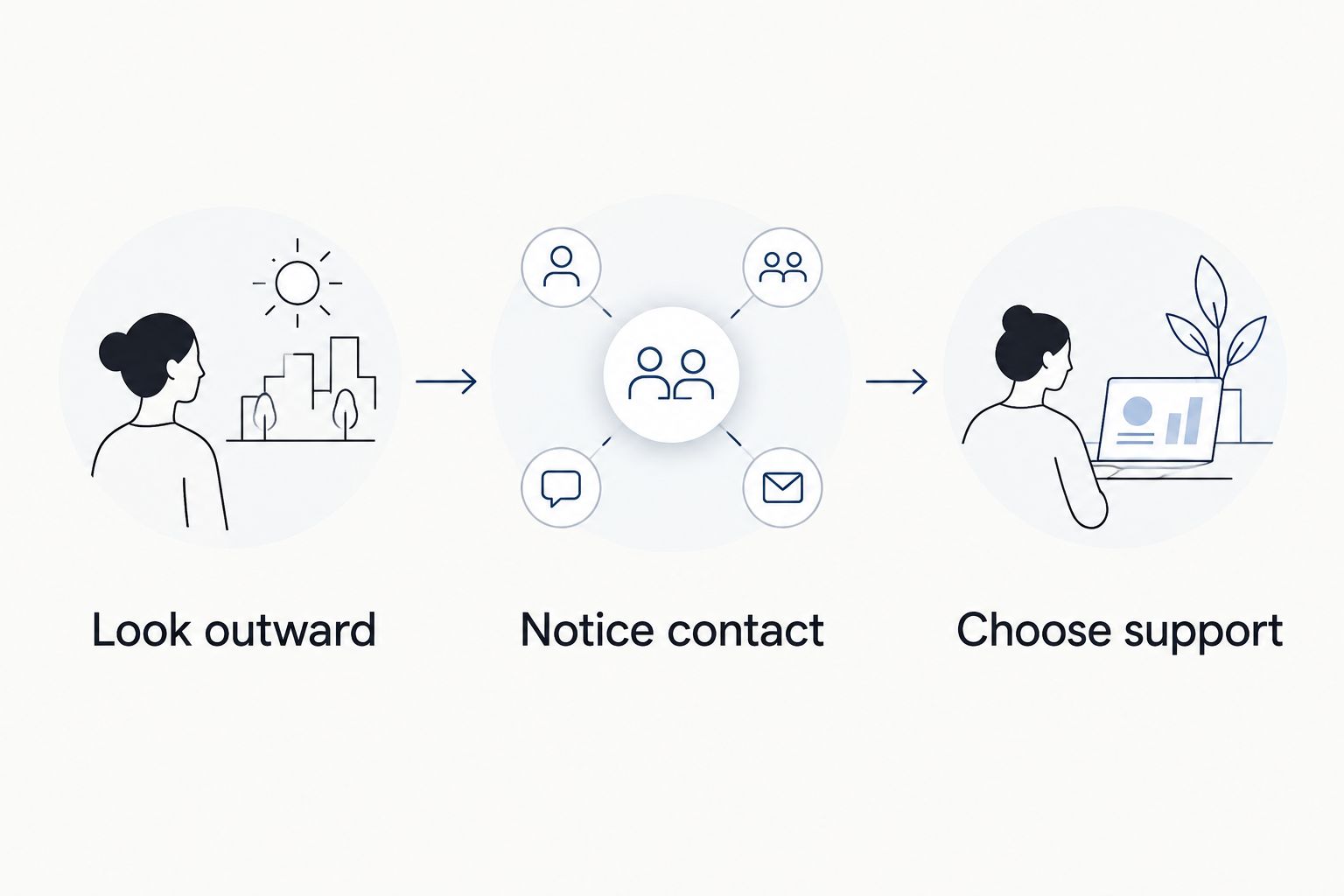
Start with a simple sequence rather than collecting techniques:
- Look outward: Notice something ordinary in your surroundings.
- Notice contact: If comfortable, notice where the chair or floor supports you.
- Choose support: Decide whether you want movement, rest, company, or no further practice.
These are invitations, not steps you must complete. If the first option feels unhelpful, you can stop there rather than pushing toward the next one.
Judge the practice by a modest question: is this tolerable and useful right now? You do not need a dramatic shift, a release, or a perfect sense of calm to justify stopping. If you repeatedly feel more distressed, seek appropriate professional guidance instead of increasing the intensity.
Which technique should you choose?
Choose gentle orienting if you are undecided. Choose comfortable paced breathing only when breath attention already feels manageable; choose movement when you want movement, and supported rest when you need a pause.
For guided support in 2026, Thisbodyisaportal offers nervous system regulation sessions and trauma-informed somatic embodiment coaching for women. Ask whether the service matches your needs, especially if you are also seeking treatment for a mental health condition.
Explore body-based support
Explore somatic embodiment coaching and nervous system regulation sessions for women.
FAQ
What's the best nervous system regulation technique for women?
Gentle orienting is this guide's default starting recommendation because it does not require breath control or inward attention. The right choice still depends on your comfort, surroundings, and needs.
What can I try if breathing exercises make me anxious?
Try an outward-focused option, such as noticing an ordinary object or listening to sounds around you. Stop deliberate breath control rather than forcing yourself through rising anxiety.
Do I need to close my eyes for somatic exercises?
No, you can keep your eyes open. You can also change position, decline touch, or stop an exercise that feels uncomfortable.
Can nervous system regulation techniques heal trauma?
These self-guided practices are not a substitute for trauma treatment. A licensed mental health professional can assess your needs and discuss appropriate treatment options.
Is somatic coaching the same as therapy?
Somatic coaching and licensed psychotherapy are different services. Ask a provider about their qualifications, scope of practice, and referral process before deciding which support fits your needs.
How long should I practice nervous system regulation?
There is no single practice duration that suits everyone. Begin with a brief, comfortable trial and stop if you become dizzy, distressed, or uncomfortable.
Does nervous system regulation mean I should always feel calm?
No, regulation does not mean maintaining constant calm. Everyday life includes excitement, grief, anger, and other feelings; a practice should not become a demand to erase them.
One last thing
Stopping is a choice, not a failed practice. Keep that permission beside any technique you try: you can open your eyes, move your body, ask for company, or decide that today needs something other than an exercise.