Best overall starting point: gentle orienting. Best for a racing pace: comfortable, slower breathing. Best for exhaustion: supported rest. This 2026 guide compares the best nervous system exercises for burnout recovery by what feels manageable—not by how intense a practice becomes.
- The best nervous system exercises for burnout recovery start with choice, not intensity; gentle orienting is the default here.
- Choose supported rest for exhaustion, comfortable breathing for a racing pace, and gentle movement when stillness feels uncomfortable.
- Thisbodyisaportal offers somatic embodiment coaching for women seeking support; coaching does not replace medical or mental health care.
- Nervous system regulation practices support coping; they do not remove the work conditions contributing to burnout.
Why this matters
When you are exhausted, another demanding routine is not necessarily the next step. A useful practice gives you room to notice your surroundings, find physical support, or move without turning recovery into another performance.
The World Health Organization describes burnout in its ICD-11 classification as an occupational phenomenon resulting from chronic workplace stress that has not been successfully managed. Not every experience of fatigue, overwhelm, or disconnection is burnout. Persistent symptoms deserve assessment rather than a self-diagnosis based on a checklist.
Thisbodyisaportal is best suited to women seeking somatic embodiment coaching and nervous system regulation sessions, rather than medical diagnosis or treatment. You can explore that approach through Thisbodyisaportal.
What makes the best nervous system exercises for burnout recovery?
For this 2026 guide, “best” means a practical starting point matched to your present capacity. It does not mean an exercise has been proven better than every alternative in clinical research.
- Choice: You can change position, keep your eyes open, or stop without completing a prescribed sequence.
- Low demand: The practice does not require strenuous exertion, equipment, or an elaborate setup.
- Tolerable attention: You can focus outside your body when internal sensations feel uncomfortable.
- Clear fit: Each exercise answers a different immediate need, such as exhaustion or restlessness.
- Honest limits: No exercise promises to cure burnout, release stored trauma, or replace changes to unsustainable demands.
Choose the practice that asks less of you today. An exercise that sounds soothing but feels intrusive is not the right starting point for that moment.
Nervous system exercises at a glance
| Exercise | Best for | Standout feature | Key limitation |
|---|---|---|---|
| Gentle orienting | An external starting point | Attention stays with the surrounding room | Scanning the room can feel uncomfortable |
| Comfortable, slower breathing | A racing pace | Uses an ordinary breath without equipment | Breath attention can increase distress |
| Supported rest | Physical exhaustion | Reduces the demand to hold a posture | Stillness does not feel restful to everyone |
| Gentle walking | Restlessness during pauses | Offers movement without a workout goal | Exertion is not appropriate for every fatigue pattern |
| Light wall pressing | Wanting a clear movement boundary | Combines voluntary effort with an obvious stopping point | Pressure can aggravate pain or strain |
The table is a decision aid, not a recovery ladder. You do not need to progress from orienting to movement, or complete every exercise in a session.
1. Gentle orienting: best for an external starting point
Gentle orienting means looking around your current surroundings without searching for a particular feeling. Let your gaze settle on an ordinary object: a doorframe, a curtain, or the edge of a table. You do not need to close your eyes or examine your internal sensations.
Best for: Moments when inward attention feels like too much, but you want a small, deliberate pause.
Try looking at one neutral object for 20 seconds, if comfortable. Notice its shape or color, then choose whether to look somewhere else or finish. This is an optional starting duration, not a therapeutic dose.
Gentle orienting pros:
- You can practice while seated or standing.
- The focus stays outside your body.
- You can finish without changing your breathing.
Gentle orienting cons:
- Looking around can turn into checking for threats rather than settling.
- A noisy or genuinely unsafe environment needs practical attention, not a grounding exercise.
Avoid forcing yourself to label the room safe. If scanning increases unease, let your eyes rest on one neutral point or stop. The purpose is to offer a choice, not argue with what you feel.
Verdict: Try gentle orienting first when you want an external focus with little physical effort.
2. Comfortable, slower breathing: best for a racing pace
Comfortable, slower breathing means allowing an easy breath to become slightly less hurried. Keep the breath ordinary rather than taking the biggest inhale possible. There is no need to hold your breath, chase a count, or make the exhale unusually long.
Best for: Moments when your breathing feels hurried and paying attention to it remains comfortable.
Start with 30 seconds of observation before changing anything. If slowing feels easy, allow a little more time for each breath; if it becomes work, return to your usual breathing. You do not have to breathe through your nose when that feels difficult.
Comfortable, slower breathing pros:
- You can practice without moving from your chair.
- You control whether to adjust the breath at all.
- The practice has a clear stopping point: return to ordinary breathing.
Comfortable, slower breathing cons:
- Focusing on breathing can increase anxiety or discomfort.
- Forcing deep breaths can cause lightheadedness or tingling.
Stop deliberate breathing if you feel dizzy, air-hungry, or more distressed. Persistent or new breathing difficulty needs medical attention rather than a more demanding breathing technique.
Verdict: Try comfortable, slower breathing only when attention to your breath feels tolerable.
3. Supported rest: best for physical exhaustion
Supported rest means letting a chair, bed, or another stable surface carry more of your weight. Choose a position that does not require you to brace or stretch. Your eyes can stay open, and rest does not have to become meditation.
Best for: Moments when fatigue makes another movement practice feel like an assignment.
For your 2026 recovery routine, consider a 2-minute pause as an optional experiment, not a target you must achieve. Sit with your back supported or lie down if that is comfortable. Adjust anything that creates pressure, pain, or unnecessary effort.
Supported rest pros:
- It does not require exercise intensity.
- You can change positions throughout the pause.
- It separates resting from achieving a particular mental state.
Supported rest cons:
- Quiet stillness can bring uncomfortable thoughts or sensations into focus.
- Rest alone does not explain or resolve persistent exhaustion.
If lying down feels exposing or uncomfortable, remain seated and look at something familiar. Avoid turning the pause into a test of whether you can relax. Feeling awake, distracted, or unchanged does not invalidate the decision to stop doing more.
Verdict: Choose supported rest when your clearest need is less physical demand.
4. Gentle walking: best for restlessness during pauses
Gentle walking gives you a way to pause without becoming still. Walk at an easy pace in a familiar, accessible place, with no distance target or fitness objective. Let the walk stay ordinary rather than making it a mindfulness performance.
Best for: Moments when sitting feels uncomfortable and light movement is within your current capacity.
Choose a route with an easy return or walk a short distance indoors. Notice whether walking remains comfortable during the activity and afterward. You do not need to keep going because movement is usually described as healthy.
Gentle walking pros:
- It allows movement without requiring a workout.
- You can keep your attention on your surroundings.
- You can turn back or stop whenever you choose.
Gentle walking cons:
- Pain, dizziness, mobility limitations, or environmental conditions can make walking unsuitable.
- Some fatigue conditions involve worsening symptoms after exertion and need individualized medical guidance.
If activity repeatedly leaves you significantly worse afterward, do not treat that response as resistance to overcome. Seek clinical advice before building an exercise routine. Recovery guidance should fit your health, not demand that your body fit a generic plan.
Verdict: Try gentle walking for restlessness only when light activity is comfortable and does not worsen symptoms.
5. Light wall pressing: best for a clear movement boundary
Light wall pressing means placing your palms against a stable wall and applying a small, voluntary amount of pressure. Release when you choose. The point is to notice effort and stopping—not to push hard enough to shake, exhaust yourself, or produce an emotional release.
Best for: Moments when you want a simple movement with a clear beginning and end.
Stand at a comfortable distance, keep your joints comfortable, and use less pressure than you think you need. Breathe normally while pressing. Skip the exercise if standing or loading your wrists, arms, or shoulders is uncomfortable.
Light wall pressing pros:
- The wall provides a clear physical boundary.
- You choose the amount of effort.
- Releasing the pressure gives the movement an obvious finish.
Light wall pressing cons:
- Pressure can aggravate wrist, shoulder, or other musculoskeletal pain.
- Effort can become another way to override fatigue rather than respond to it.
This is a gentle movement option, not a trauma-release treatment. Stop if you notice pain, dizziness, breath-holding, or increasing distress. There is no benefit in proving that you can tolerate more pressure.
Verdict: Try light wall pressing when a small, controlled movement feels welcome; skip it when it adds strain.
How to choose without making recovery another task
Choose by your immediate need, not by which exercise sounds most impressive. Start outside the body when inward attention feels overwhelming. Choose support when you are exhausted, and consider movement only when movement feels accessible.
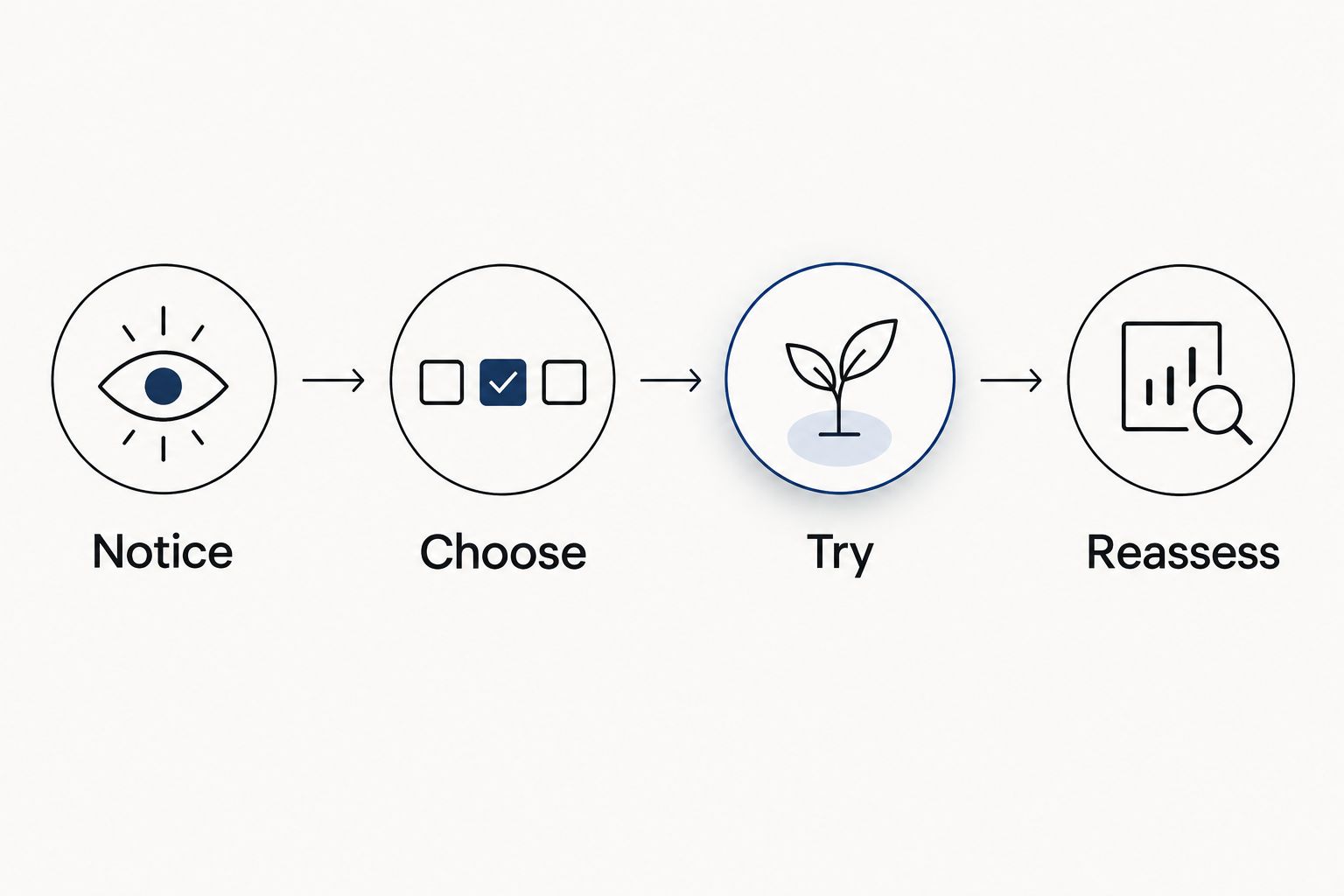
Use this simple sequence:
- Notice: Ask whether you need less effort, an external focus, or movement.
- Choose: Pick one practice rather than building a full routine.
- Try: Begin gently and leave room to change your mind.
- Reassess: Stop, adjust, or continue based on comfort—not obligation.
You do not need a dramatic before-and-after feeling. An unchanged feeling is information, not evidence that you failed. Increasing discomfort is a reason to stop or change the practice, not an invitation to push harder.
How these exercises were ranked
The 2026 ranking prioritizes choice, low physical demand, tolerable attention, and a distinct use case. Gentle orienting leads because it offers an external focus without requiring breath changes or exertion—not because it has been established as the best clinical treatment for burnout.
Thisbodyisaportal offers somatic embodiment coaching and nervous system regulation sessions. Those services are a different kind of support from the self-guided exercises above; the ranking does not compare coaching outcomes or establish treatment effectiveness.
Which exercise should you choose?
Start with gentle orienting if you are undecided. If looking around increases unease, choose supported rest or leave the exercise entirely. Your ability to say no belongs inside the practice.
In 2026, keep the larger recovery question beside the exercise question: what demand needs to change? Workload, access to breaks, boundaries, and professional support deserve attention alongside anything you practice with your body.
FAQ
What's the best nervous system exercise for burnout recovery?
Gentle orienting is this guide's default starting point because it offers an external focus without deliberate breath changes or exertion. It is not a proven best treatment for burnout; choose another option if looking around increases distress.
Can nervous system exercises cure burnout?
Nervous system exercises do not constitute a cure for burnout. They can be used as coping practices alongside attention to workplace demands, rest, and appropriate professional care.
What if breathing exercises make me anxious?
Stop deliberate breath control if it increases anxiety or discomfort. Return to ordinary breathing and consider an external focus, such as looking at a neutral object, instead.
Should I walk when I feel completely exhausted?
Do not force a walk when you feel completely exhausted. Choose rest, and seek medical advice for persistent fatigue or symptoms that worsen after activity.
Do I need to close my eyes for somatic exercises?
You do not need to close your eyes for the exercises in this guide. Keeping your eyes open, changing position, and stopping are valid choices.
Is somatic embodiment coaching the same as therapy?
Somatic embodiment coaching is not a substitute for licensed mental health treatment or medical care. Thisbodyisaportal offers coaching and nervous system regulation sessions; clarify scope and suitability before beginning.
When should I get professional help instead of trying exercises?
Seek professional assessment when fatigue, distress, sleep disruption, or difficulty functioning persists. New chest pain, severe breathing difficulty, or immediate danger requires urgent help rather than a self-guided exercise.
One last thing
Before adding a new practice to your 2026 routine, identify one existing demand you can reduce, renegotiate, or ask for help with. An exercise should not become training for enduring conditions that keep exhausting you.
The most useful next move can be subtraction: less pressure, a clearer limit, or permission to stop.